

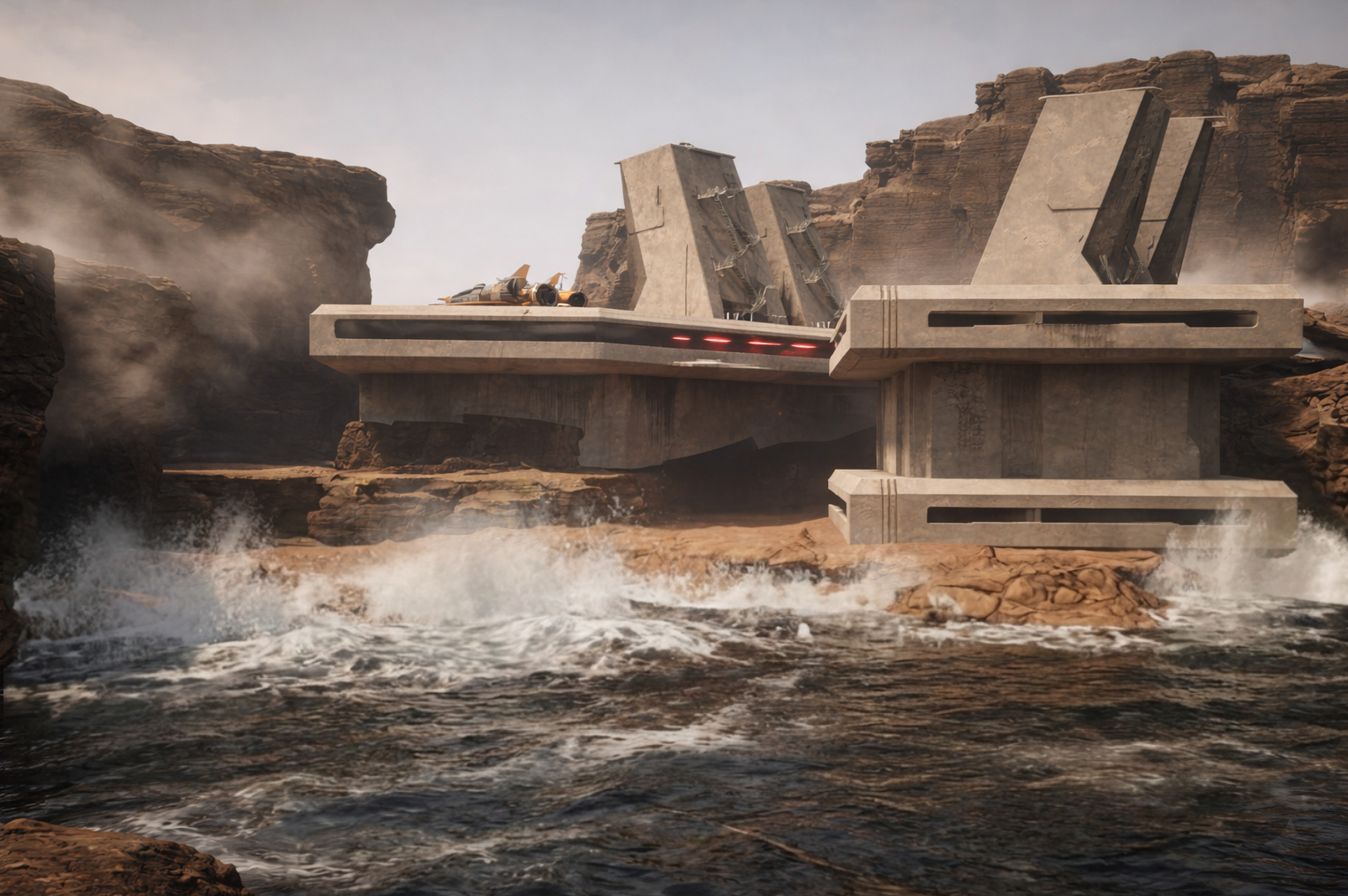
ChronoLock: The Last Run is a conceptual game environment that explores the intersection of architecture, storytelling, and interactive space, developed as a narrative-driven sci-fi experience set within a monumental, hostile landscape. The project investigates how architectural logic, spatial sequencing, and environmental design can drive gameplay, tension, and immersion.
Unlike conventional game environments, the entire built world of ChronoLock was developed using BIM workflows, with all architectural structures modelled in Autodesk Revit. Every platform, wall, corridor, structural mass, and spatial volume was conceived and constructed as real architecture—using parametric elements, layered assemblies, and coordinated building logic—before being transferred into a real-time game engine environment.
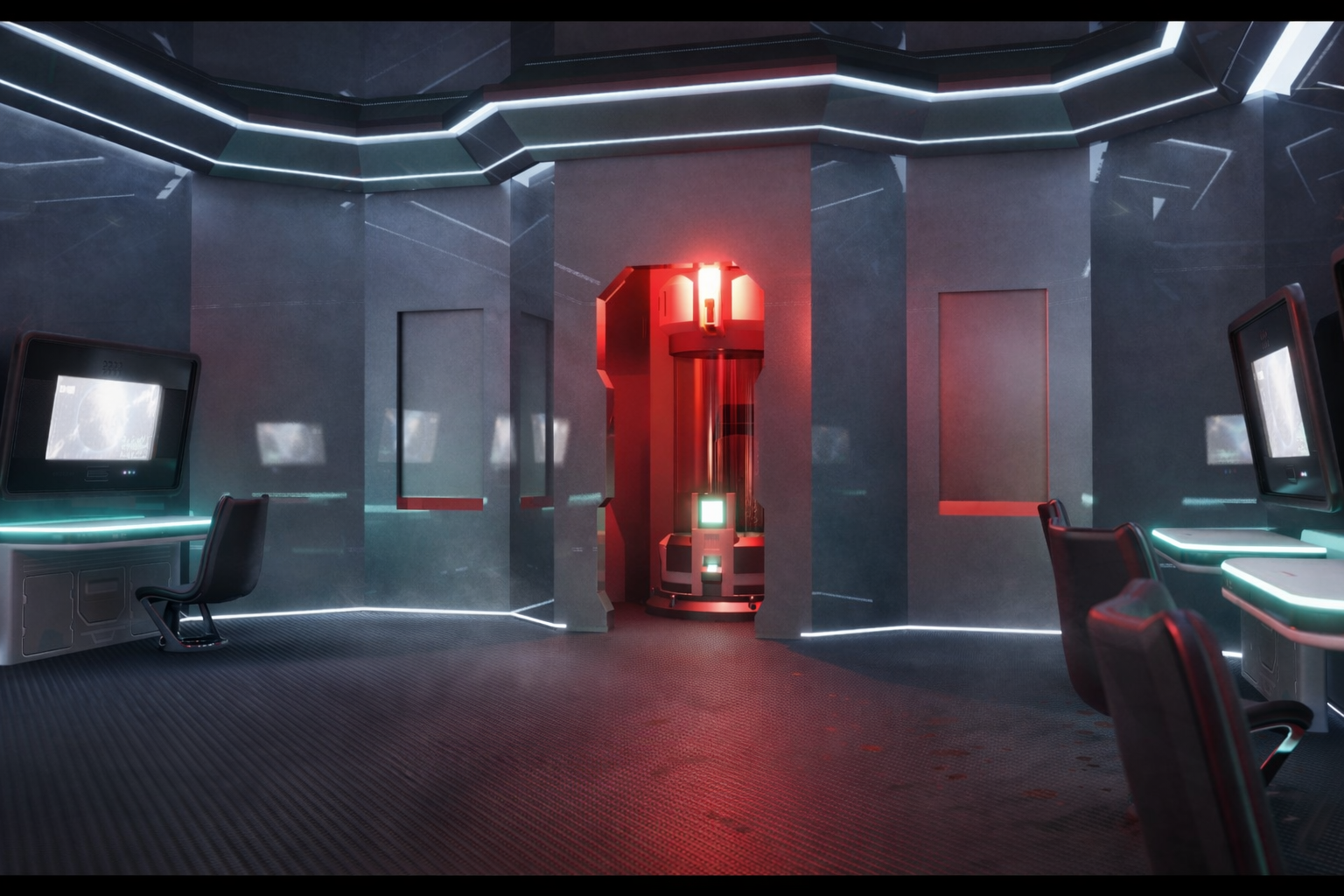
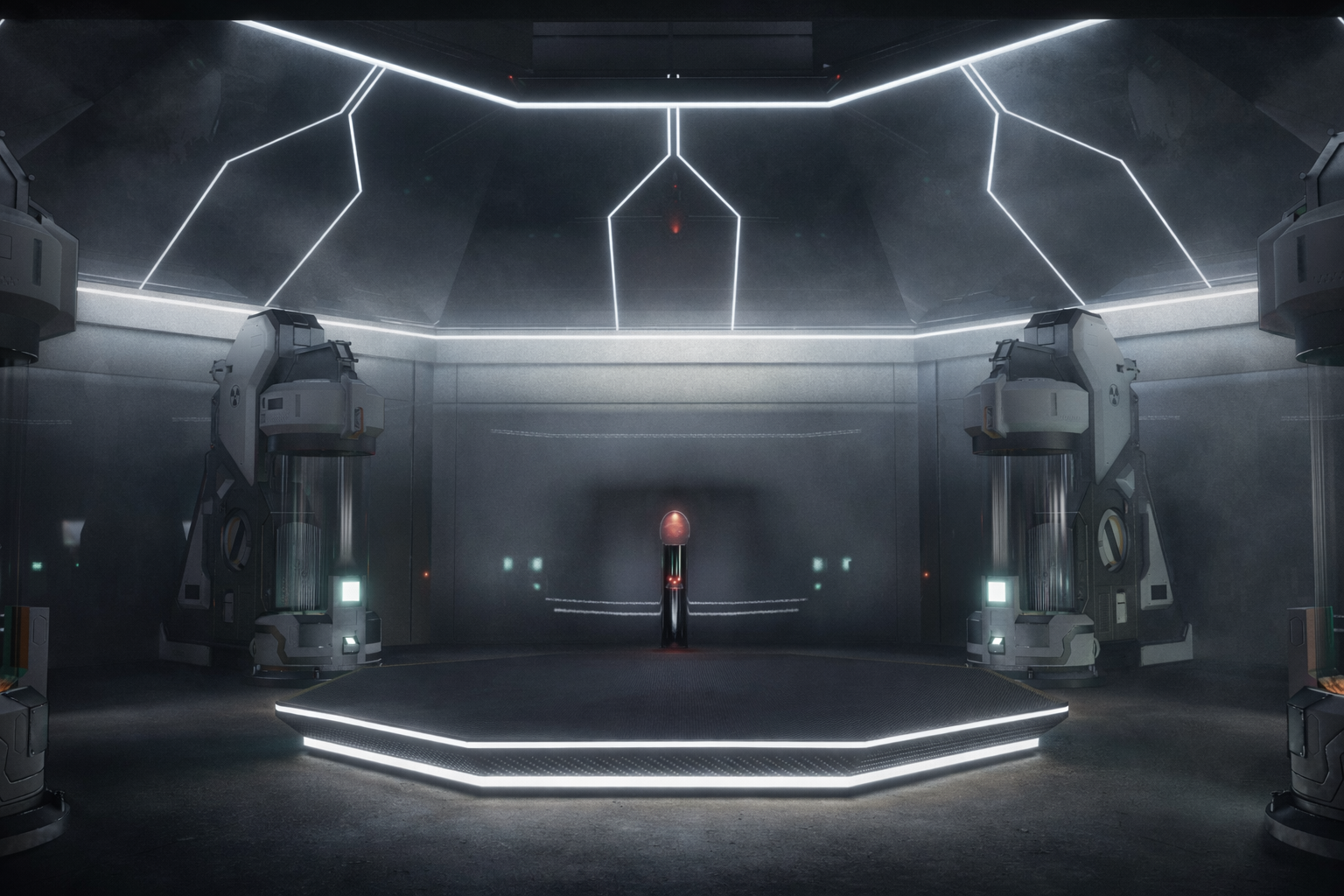
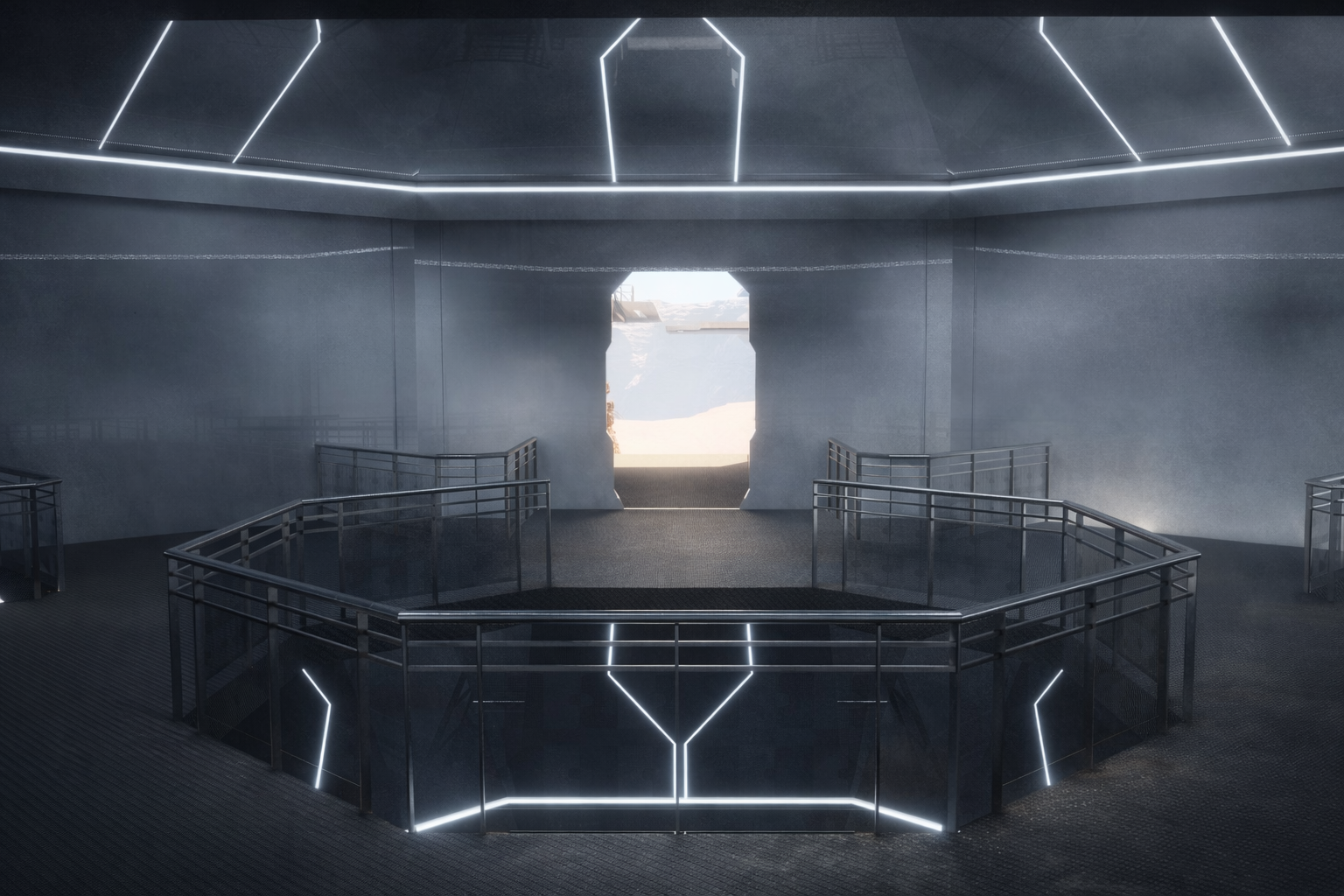
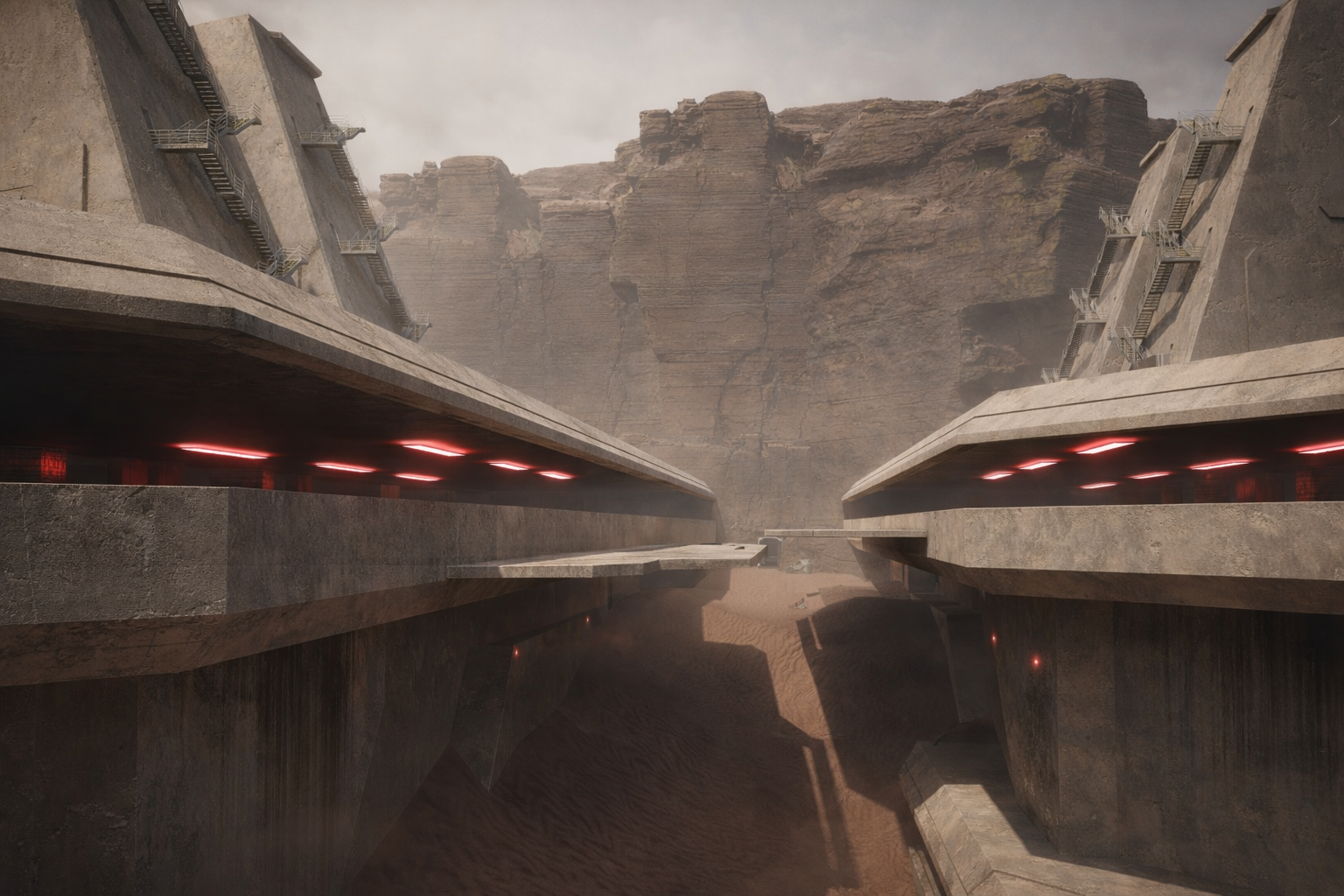
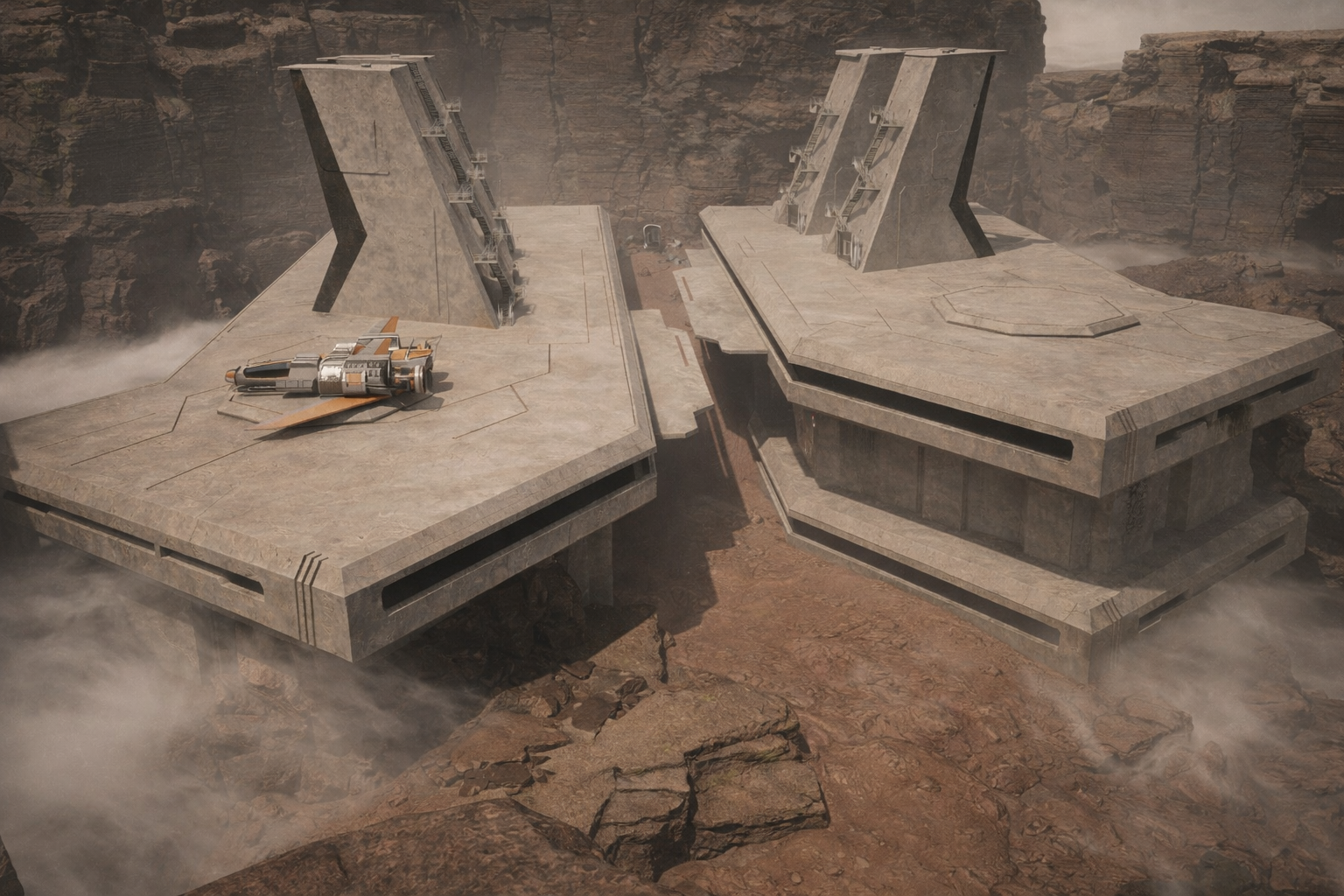
The architecture is intentionally monolithic and infrastructural, embedded into a rocky canyon landscape and expressed through heavy, stratified concrete forms. Large-scale platforms, bridges, and enclosed chambers create a sense of permanence and isolation, while sharp cuts, glowing recesses, and controlled lighting introduce contrast and narrative focus. Spatial compression and expansion are used deliberately to guide player movement and heighten dramatic moments.
Interior spaces are designed as functional architectural systems, not decorative sets. Circulation paths, voids, thresholds, and vertical connections are treated with the same rigor as real-world buildings, reinforcing believability and spatial coherence. Lighting, scale, and material transitions support gameplay mechanics while maintaining architectural consistency throughout the environment.
ChronoLock: The Last Run serves as an exploration of how BIM-based architectural design can be repurposed for interactive media, bridging the disciplines of architecture, game design, and real-time visualization. The project demonstrates an alternative pipeline where buildings are not sculpted as assets, but designed, coordinated, and experienced as architecture first.
.jpg)
.jpg)